
taking care

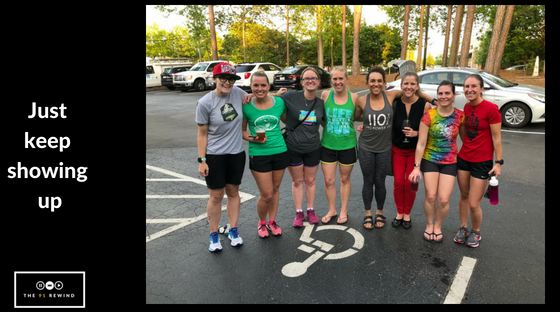
Just keep showing up

The a-MAY-zing run streak is still going, but…

it hasn’t been easy. I’ve been running a few times a week for years now, but this whole running-every-day thing is quite an experience. I’m finding out that this challenge is more mental and less about exercise or burning calories or anything else. Why is it so hard? Well, because there’s only one way to do something every day. And that is to simply do it. To decide, no matter what, to …

IMG_8611.PNGIMG_8611.PNG

There have been a few days were I ran around the neighborhood in the dark. There were days that running one little mile seemed like a marathon. For some reason, every day I complete my goal (to run for at least 10 minutes or 1 mile), I feel a tiny victory. Each little success gets me excited to keep pushing forward.

I absolutely LOVE making lists and checking boxes, y’all. I am BEYOND thrilled to have 16 (at the time of this writing…I know it’s day 17 but I haven’t gone for my run yet today!) little check marks to show for my efforts. I wonder how many more I will rack up as the streak goes on.

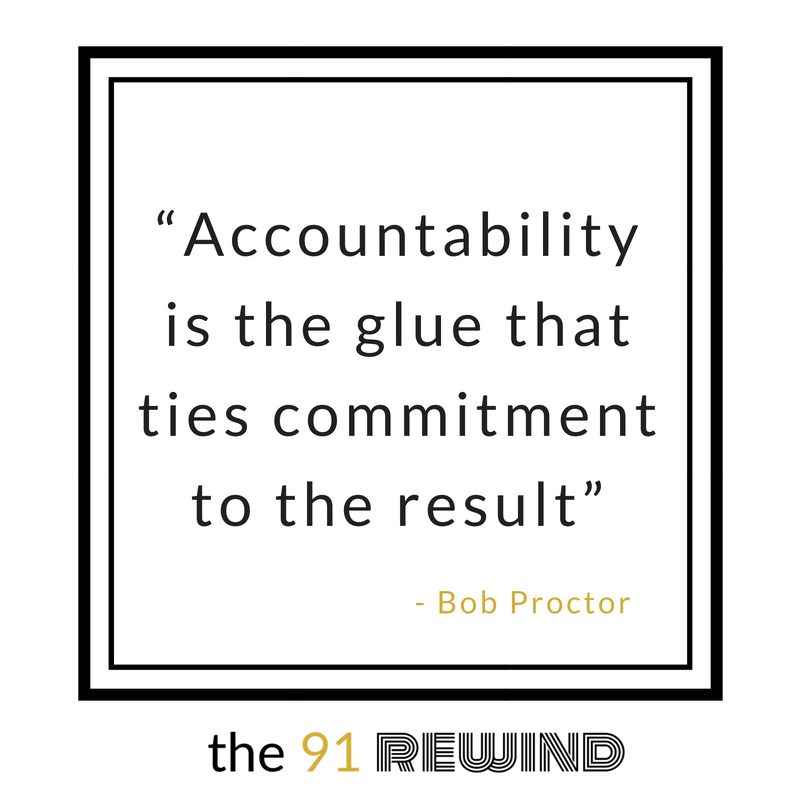
This whole experiment has me marinating on what it means to be accountable

and how we define commitment. In so many cases we use these words—accountability and commitment, to illustrate how we interact with and support other people. We want people to be accountable for their actions and honor commitments. Not just talk, follow through. Sincerity and integrity foster trust.

When people do what they say they will do, we can rely on them. When people follow through on a promise, we can have confidence in what they say next time. We feel warm and fuzzy when we can trust people; it is a beautiful thing and helps to deepen our relationships. Conversely, when people are flaky, it makes us feel not so good.


IMG_8616.JPGIMG_8616.JPG

What about our relationship with ourselves?

The way we treat ourselves informs the way we treat other people. We may not like to think of it that way, but it’s a fact. So how do you practice accountability? How do you manage commitments you’ve made to yourself?

Often times we are tempted to blow things off when no one is looking. The more we show up for ourselves, the more confidence we build. By doing what we said we would do, even when no one is watching, we empower ourselves. We learn to trust in our own abilities and our confidence grows.

IMG_8612.PNGIMG_8612.PNG

I couldn’t agree more. First, you have to commit; to decide the thing is worth doing. Second, you must hold yourself accountable. This is where creativity, flexibility, and forgiveness are key because things almost never go as planned. If you can bond these two things; if you can hold yourself accountable to your commitments, results are sure to follow. 

When Crystal and I started brainstorming this aMAYzing month we both wanted to try something new and a little out of our comfort zone. I had no idea I would be stepping into such a dramatic transformation. Running every day is teaching me that I am worthy of my OWN investment. It’s helping me to find confidence in myself and my ability to stick to something. The results are over two weeks of checkboxes and for me, that is enough to keep me going. How many will I get? I still don’t know, but I’m going to keep showing up and see what happens.   

namaste,

E

taking care

Progress

Progress. It’s a fickle thing. It can take years of momentum to accomplish just a kernel. It can also seem like it happened overnight. Sometimes things are moving along  just fine, and  suddenly they grind to a halt. Progress can be measured/noticed/recognized in many ways, but I’m convinced you have to look to find it. You have to check in with yourself a bit to process what has happened and decide what to do next. 

After some underwhelming race finishes a couple years ago, I found myself asking that very question-“what now?” I had completed my fall running events, but didn’t achieve the personal records I had envisioned.  I was pretty bummed out. I trained harder than ever before-I even tried a new training plan with wan additional day of running! I had the time in my schedule to add the extra day, and I was sure it would increase my speed.

A friend of mine, who is a registered dietitian and power lifting coach and marathoner, explained that I had probably under-performed at my events because I was over training and to continue would likely wind up with me getting injured. How could that be? I know people who run twice as much I do on a weekly basis! What she said next really threw me for a loop; “training for any event is deeply individualized, and it’s likely you were just not physically ready for the mileage increase in that particular plan.” 

I completed the training, but when race day came I was broken down instead of refreshed. She told me quite simply that if I wanted to run more, I was going to have to  focus my efforts, eliminate some other workouts, and be willing to build mileage slowly over time.   

Have I mentioned how impatient I am? The idea of doing anything slowly over time just seems like drudgery. However disappointing this news was, I had to face the facts. My method had not yielded the results I wanted. I was more focused on the outcome than I was on the path to achieve it. I wanted to break my record from the previous year and was willing to try anything to make it happen. I got caught up.

Flashback to my fifth grade teacher and her famous saying:


IMG_7560.JPGIMG_7560.JPG

I hadn’t failed to plan, my plan had failed. Was I a failure? Surely not. I was disappointed, but I was also motivated to find a better plan. 

Failing to plan is not limited to the absence of a plan. It can also mean following the wrong plan, or having too small a plan for the scope, or over planning. I don’t really like this saying now that I think about it. There are a million ways to fail with or without a plan, but most of the time you don’t really know until the end.

We cannot avoid trying something because we don’t have a perfect plan. We should plan to fail, in fact.  When something doesn’t work, we can learn from it and make better choices the next time. Even a failure can lead to doing better in the future.

I want to go back to my fifth grade teacher and tell her to stop giving the kids anxiety. Failure is not a bad thing! Failing as fast as possible can be viewed as a path to breakthrough success. We should change the saying to something a bit more inspiring: 


IMG_7570.JPGIMG_7570.JPG

It gets me thinking about how many times I have tried something new and felt disappointed. Maybe that wasn’t a result of not working hard enough, maybe the let down was inevitable because of a flaw in the plan. Disappointment, like failure, is not a bad thing necessarily. The fact that one has an opinion, good or bad, on the outcome of an event shows an investment. (If we don’t care at all about something it’s easy to let it go.) Disappointment can drive us to make huge leaps forward. 

After we experience a setback in life we are faced with two choices – we can give up, or we can regroup and try again. While giving up is an option, in my opinion it isn’t the best one. If you give up every time you hit a wall, you’ll just be left with a long list of limitations.

If you want to learn something, if you want to experience progress, you have to be willing to screw up a little. You have to go for it despite not knowing exactly how or what to do and possibly fail. We will never be able to know in advance if the plan will work. We’ve got to be willing to try it anyway. 

If it doesn’t work out, at least you know that it doesn’t work out. You have knowledge and experience, and THAT my friends, is progress!